Below is your observing guide for the months of May and June 2026.
As spring transitions to summer in the northern hemisphere, the nights become shorter but warmer, offering comfortable observing conditions. This guide highlights some of the better targets you should plan to observe. While it doesn’t list all targets, it will give you a good starting point.
For those in the southern hemisphere, longer, cooler nights offer excellent opportunities for extended observing sessions.
For those accessing this after the stated months you can view the guide for July and August 2026.
How to Use This Observing Guide
The observing guide lists eight categories of astronomical features that may be observed. These are: key constellations, objects near each celestial pole, the Moon and its phases, planets that will be visible, eclipses, conjunctions, meteor showers and comets. Don’t worry if you don’t know what these are, as there are explanations for each.
Where possible, it is indicated if each target is visible to the naked eye, using binoculars or if a telescope is required.
The observation guide includes tips for observing each type of object.
To aid your sessions, we have included links to each object in the web version of Stellarium. You can click on the highlighted text or the constellation images. If, for some reason, the link doesn’t work, but you arrive at Stellarium, search for the object in the search bar. To change the time to your current time, click on the time in the lower right and click on the small clock between the date and the time, as circled to the right.
Due to time zones, the timing of conjunctions at the time of the closest approach depends on your time zone. As such, the link may not take you to when the two bodies are at their closest.
If you are very new to stargazing, we suggest first identifying the constellations detailed below. Locate them and trace out their shape. This will help you learn to navigate the night sky. The time spent will make things much easier when you attempt to locate smaller and fainter targets.
If possible, you should attempt to find a dark site. This will allow you to see all of the targets below. In a large city, the bright sky will wash out all but the brightest objects.
As always, allowing your eyes to become dark-adapted is a good idea. This can take 30 minutes. During this time, you can study the brighter stars. Remember to use red light and/or a dark theme on any devices you use.
For dimmer objects, averted vision. We instinctively look directly at what we wish to see. This places the object in the area of the eye that sees color best and in sharp detail. However, it is not the most sensitive part of the eye. To see dim objects, avert your eyes a little. Experiment with averted vision to find where the best spot is for you.
Unless otherwise noted, all photographs of celestial objects in the observation guide are taken by the author. They were either taken through a moderately sized refracting telescope or using a DSLR on a tripod. Keep in mind that these photographs are long exposure and are enhanced. They do not present what you will see with the naked eye.
Key Constellations
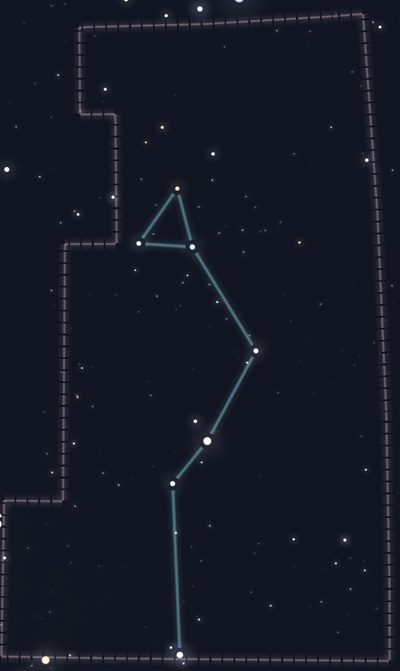
Boötes
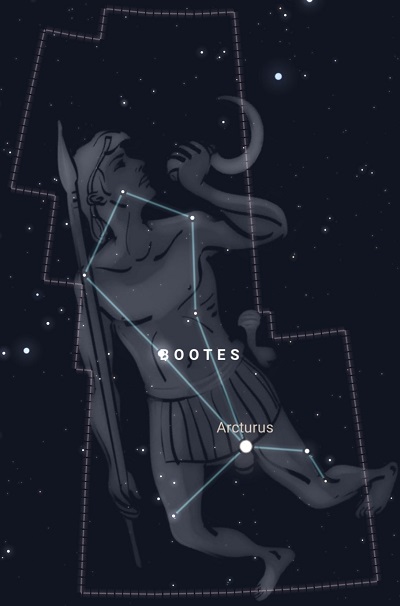
Boötes, the Herdsman, is a prominent northern constellation best visible in spring evenings. Its brightest star, Arcturus, is easy to locate by following the arc of the Big Dipper’s handle (“Arc to Arcturus”). The constellation resembles a kite or ice cream cone shape, with Arcturus at its base.
Naked eye:
Arcturus (α Boötis): Fourth brightest star in the night sky
Izar (ε Boötis): Second brightest star in the constellation
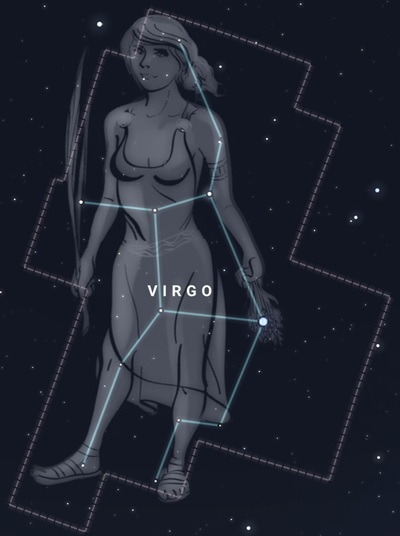
Virgo is one of the largest constellations and contains the Virgo Cluster, a massive collection of galaxies. Though the constellation’s stars are relatively faint, its position near Boötes and Leo makes it easier to locate.
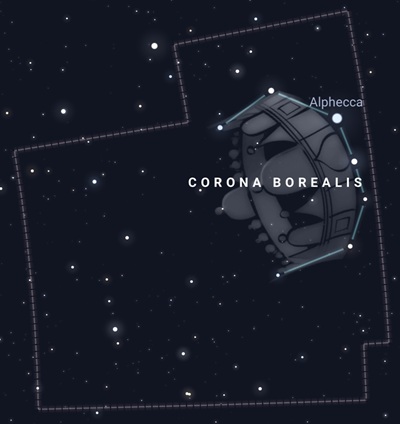
Also known as the Northern Crown Corona Borealis, is a small but distinctive semicircular pattern of stars between Boötes and Hercules. This compact constellation is easy to identify in the spring and summer evenings.
Naked eye:
Alphecca (α CrB): The brightest star, also called Gemma
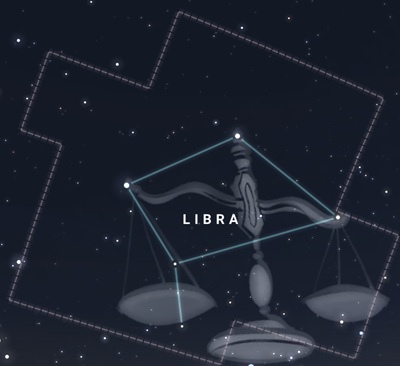
Libra, the Scales, is a zodiac constellation visible in late spring and summer evenings. Though lacking in bright deep-sky objects, it contains several interesting double stars.
Serpens Caput, the head of the celestial serpent, is the western portion of the divided Serpens constellation. Positioned between Boötes and Ophiuchus, this region of the sky is particularly rich in deep-sky treasures during May and June evenings. It is the only constellation split into two parts: Serpens Caput (the head) and Serpens Cauda (the tail), separated by Ophiuchus.
Naked eye:
Unukalhai (α Serpentis): The brightest star in Serpens, an orange giant
β Serpentis: Blue-white star forming part of the serpent’s head
Binoculars:
M5: One of the finest globular clusters in the northern sky
Multiple double stars form the “head” pattern
Small telescope:
M5: Resolves into countless stars with a concentrated core
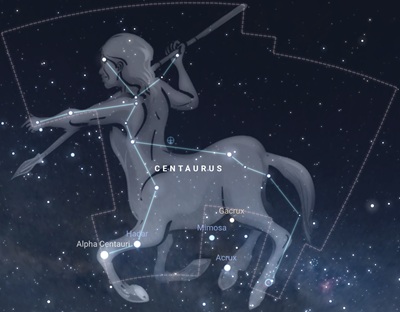
Centaurus, the Centaur, is a magnificent southern constellation best visible during May and June for southern hemisphere observers. This large constellation contains Alpha Centauri (Rigil Kentaurus), the closest star system to our Sun, and hosts a wealth of deep-sky objects, making it a treasure trove for observers.
Naked eye:
Alpha Centauri: Third-brightest star in the night sky and our nearest stellar neighbor
Beta Centauri (Hadar): Brilliant blue-white giant star
The constellation forms a distinctive pattern near the Southern Cross
Binoculars:
ω Centauri (NGC 5139): The largest and brightest globular cluster in the sky
NGC 3918: Blue planetary nebula, sometimes called the “Blue Planetary”
NGC 5128 (Centaurus A): Peculiar elliptical galaxy with a distinctive dust lane
Canes Venatici
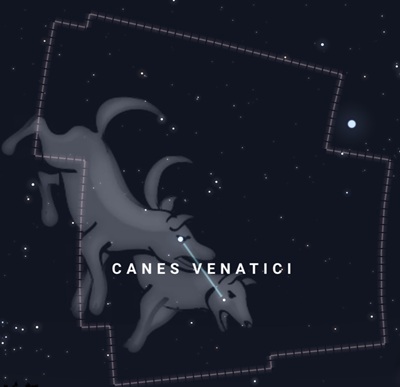
Canes Venatici, the Hunting Dogs, is a small northern constellation located under the handle of the Big Dipper. Though modest in size, it contains several spectacular deep-sky objects that make it a favorite target for amateur astronomers during spring evenings.
Naked eye:
Cor Caroli (α CVn): The constellation’s brightest star, a notable double star
La Superba (Y CVn): A carbon star and one of the reddest stars visible to the naked eye (when at maximum brightness)
Binoculars:
M3: One of the finest globular clusters in the northern sky
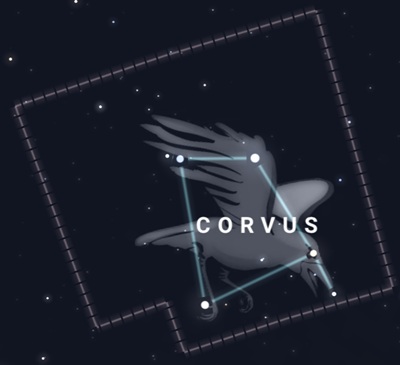
Corvus, the Crow, is a small but distinctive constellation visible in the southern sky during spring evenings. Its compact, roughly quadrilateral shape makes it easy to identify, despite having no first-magnitude stars.
Naked eye:
Gienah (γ Corvi): The brightest star in the constellation
The distinctive quadrilateral pattern formed by its four brightest stars
Binoculars:
NGC 4038/4039 (Antennae Galaxies): Faint smudge of light (challenging)
Several double stars
Small telescope:
NGC 4038/4039: Reveals as a pair of colliding galaxies
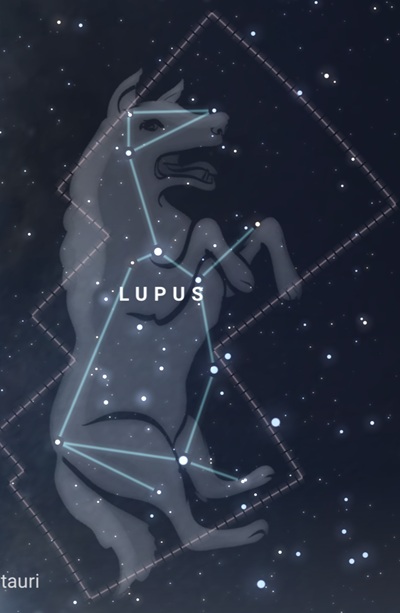
Lupus, the Wolf, is an ancient southern constellation best observed during May and June. Located near Centaurus and Scorpius, this constellation contains numerous bright stars and interesting deep-sky objects for southern hemisphere observers.
NGC 5882: Small planetary nebula with a distinctive greenish tint
Several double stars including μ Lupi and κ Lupi
Objects Near the Celestial Poles
Northern Celestial Pole Region
The northern celestial pole region remains relatively unchanged from previous months, offering consistent circumpolar targets for observation. The primary marker remains Polaris, the North Star, which stays nearly stationary while other stars appear to rotate around it.
For southern hemisphere observers, the summer months of January and February offer excellent views of the southern celestial pole region and its rich collection of objects.
Mercury-Uranus Conjunction (May 17): Extremely close (0°55′) but very difficult to observe due to proximity to the Sun.
June 2026
Venus-Jupiter Conjunction (June 9): The “Main Event.” The two brightest planets will be just 1.6° apart in the northwestern evening sky. They will remain strikingly close throughout the first two weeks of June.
Planetary Parade (June 12): A naked-eye alignment of Mercury, Venus, and Jupiter visible shortly after sunset.
ZHR: 50 (best viewed from the southern hemisphere)
Notes: Fast meteors, often leaving persistent trains
June Bootids
Active period: June 22 – July 2
Peak: June 27
Parent body: Comet 7P/Pons-Winnecke
ZHR: Variable, usually < 10 but can produce outbursts
Notes: Slow-moving meteors, unpredictable rates
Comets
No “Great Comets” are currently forecasted for this window. However, observers should keep an eye on Comet C/2024 S1 (ATLAS) and similar prospects that may brighten as they approach perihelion. For real-time updates, monitor the Minor Planet Center or The Sky Live.
I found astronomy while working in dark rural locations. Initially, I explored the night sky and learnt the constellations before purchasing a pair of binoculars to further my knowledge of the sky.
My first telescope was a 200 mm Newtonian reflector on an equatorial mount. I found that this telescope had a steep learning curve but was a rewarding experience.
As time progressed, I became interested in astrophotography. This resulted in purchasing a 110 mm refracting telescope and a dedicated monochrome-cooled astronomical camera. This resulted in another very rewarding steep learning curve that far surpassed the experience with my first telescope.
I have joined Telescope Guru to share my knowledge of telescopes and astronomy.